

The Science Behind Slime Making — And Why We Can’t Stop Playing With It!
If you’ve ever stretched, squished or poked a glob of slime and been strangely mesmerised, you’re not alone. Slime is more than just a fun craft—it’s full of fascinating science. Let’s dive into the polymers, the sensory thrills and the chemistry that make slime so addictive.
What Is Slime?
At its core, slime is a non-Newtonian fluid, meaning it doesn’t behave like a typical liquid or solid. It can flow like a liquid when handled gently, but under stress it might bounce or snap like a solid.
The Polymer Chemistry
The “gooey magic” of slime comes down to polymers. Many DIY slime recipes use white school-glue (containing a polymer like polyvinyl acetate or polyvinyl alcohol) combined with a “slime activator” (for example borax or a borate-ion source). When you mix these, something amazing occurs: the long polymer chains in the glue become cross-linked by the activator, creating a network that’s stretchy, squishy and full of behaviour between liquid and solid.
To break it down:
- Glue provides long chains of molecules that can slide past one another—hence the glue is liquid or gel-like to begin with.
- When you add a borate activator (like borax dissolved in water) it reacts with hydroxyl (-OH) groups on the polymer chains, creating bridges (cross-links) between chains. This restricts how freely the chains can move.
- The result? You get a material that is viscoelastic—it has properties of both a viscous liquid (it can flow) and an elastic solid (it can bounce or hold shape under certain stress). 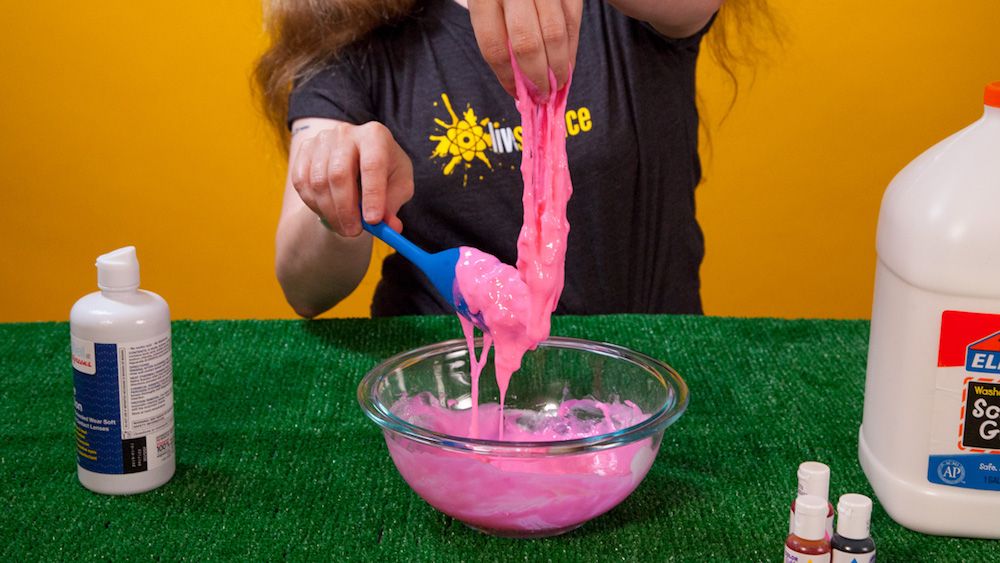
Why Slime Is So Irresistible (And Even a Bit Addictive)
Playing with slime isn’t just fun it engages several human needs and sensory triggers at once.
1. Tactile & Sensory Satisfaction
Slime delivers rich tactile feedback: it can stretch slowly under gentle tension, snap when pulled quickly, ooze when left alone, bounce if thrown. That variety in texture and behaviour is deeply satisfying.
2. ASMR & Sound Appeal
Many slime-videos show satisfying sounds: crunch, pop, squish. These audio-tactile cues tap into ASMR-type responses (Autonomous Sensory Meridian Response)—which many people find calming or strangely addictive.
3. Creative Freedom & Customisation
Slime is highly customisable: you can add lots of colours, glitter, scented oils, beads, foam, textures. That means each batch can feel unique and personal. The ability to “make it your own” adds to the fun.
4. Mindfulness, Focus & Sensory Play
For kids (and adults) especially with sensory processing needs or ADHD, slime can help provide a focused, calming activity. The repetitive stretching, squishing and repositioning gives a physical outlet and may help reduce anxiety or excess energy.
5. The Mystery & Surprise Element
Because slime behaves in unexpected ways (sometimes flowing like liquid, sometimes snapping like a solid), it keeps you intrigued. What will it do next? That novelty keeps people playing.
The Science of Slime in Action
Non-Newtonian Behavior
Slime is a classic example of a material whose behaviour changes depending on how you handle it. If you apply slow, gentle movement, the polymer chains have time to rearrange and the material flows. If you apply a sudden, sharp force, the chains don’t have time to move so the material resists, and acts like a solid.
Cross-linking & Viscosity
By changing the amount of activator (borate ions) or the glue concentration (polymer chain density), you can alter how many cross-links form and thus how “firm” or “slimy” the end result is. For example: more activator → more cross-links → less sliding among chains → firmer/slippier texture. Less activator or more water → fewer cross-links → stickier or runnier slime.
Experimenting With Texture
There are many ways to vary slime texture:
- Use clear vs white glue
- Add shaving cream to make “fluffy slime” (adding air and changing density)
- Add foam beads, glitter, scents, colourants
- Use different activators (liquid starch, saline solution with borate, baking soda + contact lens solution)
Why It Works in a Science Classroom
Educators love slime because it’s a hands-on demonstration of concepts like polymers, chemical reactions, cross-linking, viscosity, states of matter and non-Newtonian fluids. For example, students mixing glue and borax observe how changing ingredient ratios affects texture, giving them real insight into how molecular structure translates into macroscopic material properties.
How to Make Slime – A Simple Guide
Here’s a basic recipe and instructional walk-through so you understand how the science applies.
(Always supervise children when handling chemicals or activators, wash hands after, store properly.)
Ingredients
- White or clear school glue (PVA/PVAc-based)
- Water (to adjust consistency)
- Slime activator (borax solution, saline solution, or a ready-made slime activator)
- Optional: food colouring, glitter, scented oils, beads, foam pieces
Step-by-Step
1. Pour a desired amount of glue into a mixing bowl.
2. Add water if you want a thinner base (easier to mix, stretchier).
3. Optional: stir in food colour, glitter or scent.
4. In a separate small bowl, prepare the activator solution (for example dissolve a small amount of borax in water).
5. Slowly add the activator to the glue mixture while stirring. You’ll notice the mixture start to get thicker and forming strands.
6. When it starts to pull away from the sides and form a blob, take it out and knead it with your hands until it becomes less sticky and reaches the desired consistency.
7. Play! Stretch, poke, bubble, bounce. See how it behaves.
8. Store slime in an airtight container when not in use to prevent drying out.
Important Notes & Safety
- Don’t pour slime down the drain—it might block plumbing due to its polymer network.
- If too sticky, add a bit more activator. If too firm, add a bit more glue or water (but add slowly).
- Always supervise kids and ensure hands are clean before/after playing.
- Store in cool, airtight container to extend life.

The Bigger Picture: Why Slime Matters
Edutainment & STEAM Learning
Slime is more than messy fun—it’s a gateway into STEAM (Science, Technology, Engineering, Art & Math) education. Students combining craft with chemistry learn real-world concepts: molecular structure, materials science, states of matter, and even experimentation and iteration.
Stress Relief & Sensory Play
In a fast-paced world, engaging our hands and senses in slow, tactile play can be calming. Slime gives a break from screens, triggers multi-sensory responses, and gives control and satisfaction through hands-on activity.
Creativity Meets Chemistry
Slime is a blend of science + craft. You learn how polymers work, and you simultaneously craft a colourful, scented stretchy toy. That dual appeal means it hits both the “learning” and the “fun” bucket.
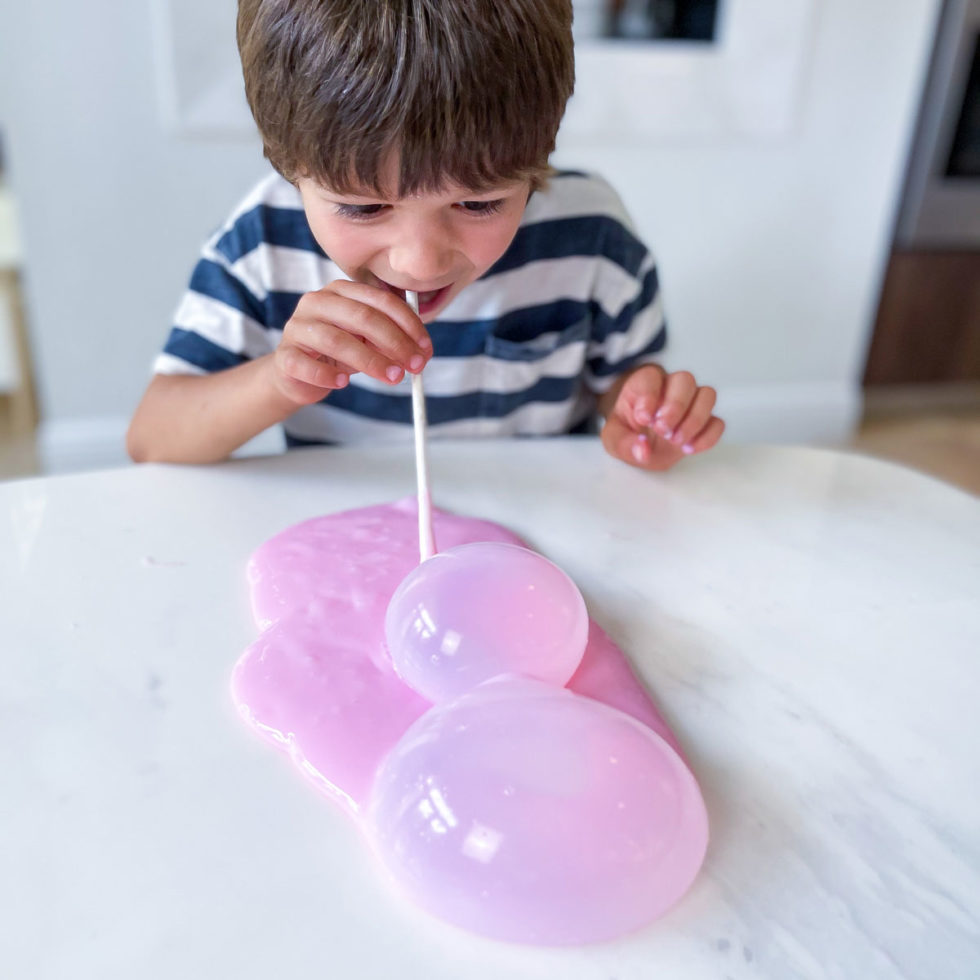
From stretchy goo to bouncing blob, slime taps into chemistry, creativity and sensory delight. When you stretch, poke or twist your slime, you’re actually experiencing the behaviour of cross-linked polymer chains in real time. It’s science you can hold. And maybe that’s why we can’t stop playing with it.
If you’re ready to turn your next craft session into a science experiment, pick your ingredients, play with textures and colours—and most of all, have fun. Because slime is more than a fad, it’s hands-on chemistry, textured joy and playful learning all rolled into one.
Visit our website and check out our slime making kit or come over to our retail store at Craftiviti, Level 2, Centrepoint Bandar Utama.